
Neural Link
Imagine having the ability to directly interface with a machine using your brain and having the ability to control it; this would open up a whole host of new possibilities that are yet to be discovered. A device that can read your mind and allow you to interface with a machine sounds like something straight out of science fiction and way ahead of our time but having such a device would be a game-changer.
The applications of such a device are endless. It could revolutionize the medical industry and the world. A device that can read and understand the neurons in our brain could help find the cause of seizures; it can help people who have problems performing everyday activities due to poor motor control, coordination issues, or nerve damage regain the ability to enjoy daily life. It could also help people who have robotic prosthetics control them just with a simple thought. Even everyday people can use such a device to help them at work and complete day-to-day tasks. Such a device exists and is currently being tested and developed by a company called Neuralink.
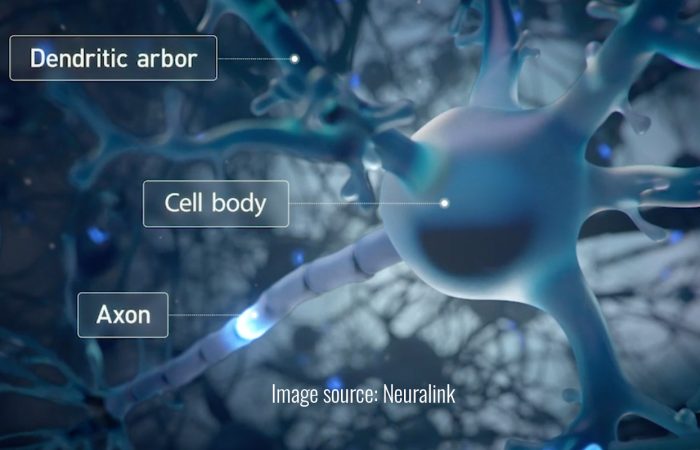
Before talking about Neuralink, we must first understand how our brain works. The brain is the most important and complex organ in the body and contains over 86 billion neurons. The main job of neurons is to send and receive information. Although there are many different types of neurons, they generally have three parts:
- An axon sends a signal.
- A dendrite receives a signal.
- A cell body known as a soma computes the signals.
The neurons in our brain connect through axon-dendrite connections known as synapses. At these synapses, neurons communicate with each other using chemical signals called neurotransmitters released in response to an electrical spike called an action potential. When a neuron receives the right combination of neurotransmitters, it creates an action potential that causes the neuron to relay messages to its downstream synapses, which an electrode can detect. Neurons are the central processing unit of our body. They control all aspects of our body, from movement and thinking to senses like touch and smell. They also control other body functions, such as telling the lungs when to breathe or when telling us when to blink.
Neuralink is calling its device “Link” (N1); it works by creating a brain-machine interface (BMI) that enables a computer or another digital device to directedly communicate with the brain. For the N1 to work, Neuralink uses a machine to insert tiny electrodes, which are just a few micrometers thick strands embedded in between neurons in your brain so they can read your activity. Elon Musk says that people paralyzed due to a spin injury, which makes the brain unable to communicate with the limbs, can walk again using his device; it decodes movement impulses and sends them to the brain. “Link” (N1) can also send impulses to the neurons in the brain, which could help solve brain disorders. It might even be able to store memories that could be transferred to a robot or another body sometime in the future, but we are still a long way away; there are still many hurdles to overcome before this is even possible.
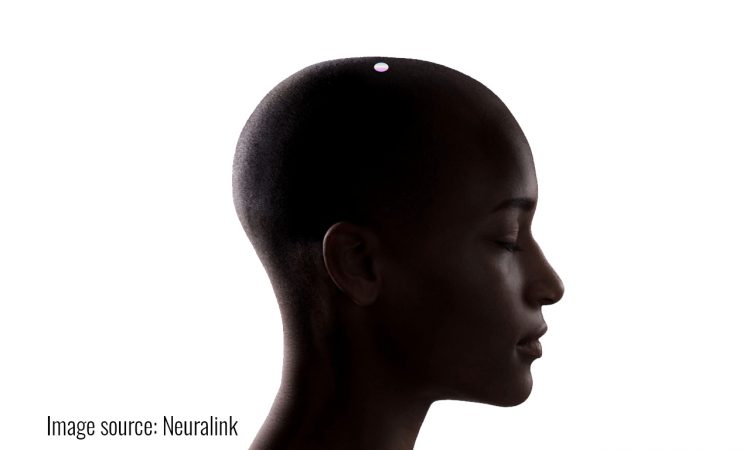
In the future, Neuralink plans to have chips embedded in the brain that communicate with an external device placed behind the ear. Earlier versions of Neuralink were being tested on rats. They had a USB port sticking out of their head, which seemed impractical and uncomfortable. The latest version of Link, called N1, is only 23 millimeters by 8 millimeters in length, about the size of a thick coin; unlike the chips that Neuralink eventually plans to have, N1 will replace a piece of the skull. Once a hole is drilled in the skull, and the electrodes are inserted, the disk-shaped brain-machine interface (BMI) fills in the hole, and the skin is super-glued over the interface. The interface monitors your neural activity, compresses the data, and sends it to a phone or computer device. Musk claims that Link will last up to a day and can be charged wirelessly.
In April of 2021, Neuralink released a video of a monkey named Pager, implanted with two N1 devices performing brain control by playing pong on a computer using its brain. The N1 can transmit 2,048 electrodes worth of spiking information over a radio wirelessly, which is quite frankly unheard of. Even though Neuralink’s N1 has remarkable potential, it also comes with risks. To insert the N1, you will need to undergo neurosurgery which is a very dangerous procedure; the three most significant risks are Infection, bleeding, and tissue damage.
Recently, there has been a lot of controversy surrounding the treatment of Neuralink’s test monkeys. In February 2022, an animal-rights group filed a complaint about the treatment of the monkeys used in Neuralink’s research at UC Davis between 2017 – 2020. The group obtained documentation that indicated that 23 monkeys had experienced extreme suffering due to the highly invasive head implants. A UC Davis spokesperson said, “We strive to provide the best possible care to animals in our charge. Animal research is strictly regulated, and UC Davis follows all applicable laws and regulations, including those of the US Department of Agriculture.” Neuralink refuted accusations that its test monkeys were mistreated and has said that its monkeys were kept at UC Davis while construction began on its in-house animal facility.
If Neuralink’s N1 works, it could completely revolutionize the medical industry; it has the potential to revolutionize the treatments not just for stroke and paralysis but any type of brain disease like Parkinson’s, epilepsy, or even Alzheimer’s. In the future, after many decades, I believe we will have microchips in our brains to treat any brain disease and also have the ability to create a brain-machine interface for anyone.