Race to the Moon
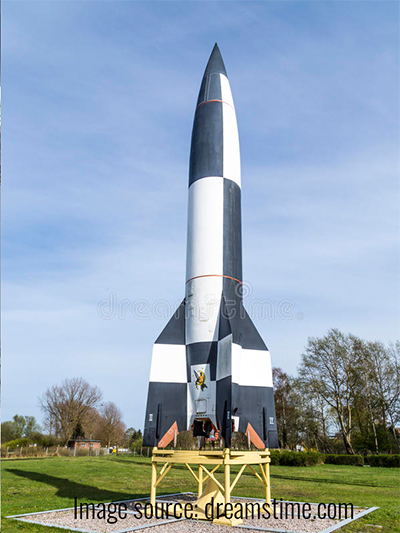
In 1947 during the closing days of World War II, the Americans and the Soviet Union stormed into Germany. Both the soviets and the Americans started a race to find the Nazi’s most prized weapon – a long-range rocket called the V2, the first rocket made by humanity that could go into space.
The only thing more valuable than the V2 was the German genius Wernher Von Braun who created it. Although he was the Nazi’s top rocket designer, his real ambition was never about war but about space. He believed that humans needed to be in space and explore other worlds. By collaborating with the Nazis, Von Braun could fund his rocketry experiments; this was a costly hobby, and only the german military and governments could finance his dream at the time.
But the V2 was not enough to save the Reich. Weeks after the last V2 rocket was launched, the Americans pushed deep into Germany; their search for the V2 led them to a concentration camp called Mittelbau-Dora as horrific as the place was, it hid another secret, a vast underground V2 factory. The Americans found a hidden crate with the V2’s blueprints; they had everything they needed to produce the rocket except Von Braun. After the fall of the German Reich, the US found Von Braun. Under Operation Paperclip, the United States brought Von Braun to the US to continue his work leaving the soviets to find any scraps left behind by the US.
A brilliant rocket engineer named Sergei Korolev led a team into the german territory. The Soviets found a hidden stash of documents and spare parts that the Americans left behind. Now the soviets had the means to build a rocket that could travel into space or destroy any enemy of the Soviet Union.
To reach America, Korolev had to improve upon the V2’s design. The Russians started experimenting with the rocket by elongating the V2 to hold more fuel, giving it a bigger engine, and designing their own guidance systems; they named it the R1, then moved on to R2 and other iterations. As Korolev perfected his rocket design, his government threw him another challenge. The Soviets had developed a Thermo-Nuclear Device more than 100 times as powerful as those dropped on Hiroshima and Nagasaki. They wanted to put it on his rocket. Since his rocket had to carry double the payload, Korolev designed a multi-stage rocket called the R7; it had five rockets that would work as one, bringing the core together will be four powerful booster rockets that would lift the core rocket past the hold of earth gravity and then they will be jettisoned freeing the core to fly to its target. It was a breakthrough design, but Korolev had to find a way to build it.
Von Braun and his team were on standby for five years in the United States. Von Braun was unwilling to wait and published his ideas of space travel on Americas most read newspaper; it caught the eye of a legendry filmmaker called Walt Disney, who was designing a revolutionary theme park called Disneyland and was looking for a way to promote its future theme park “Tomorrowland.” He employed Von Braun to promote his theme park by showing Americans the future of space travel through Van Braun’s vision of space travel.
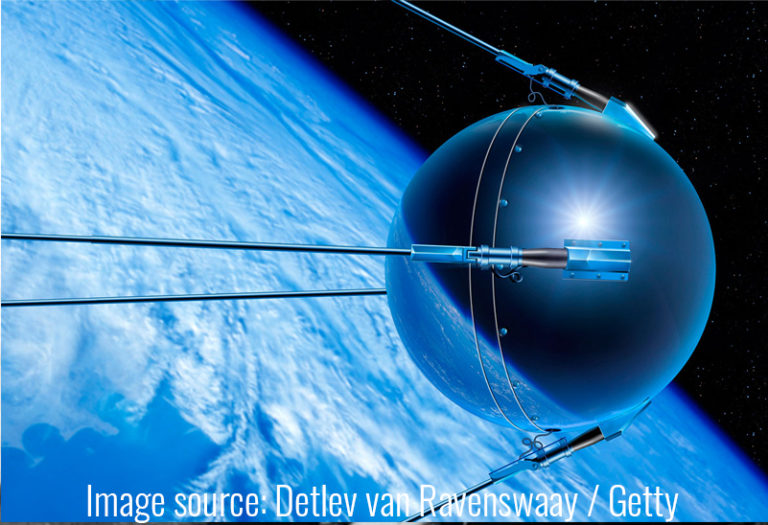
The Soviet Union was moving rapidly ahead; now that Korolev had a working rocket, he planned to send America a message by attaching the world’s first satellite called, Sputnik-1 and launching it into earth’s orbit. On October 4, 1957, sputnik was launched.
In response to sputnik, the US announced that it would launch its own satellite with the help of the US Navy. The mission was called Vanguard. Vanguard launched from Cape Canaveral, Florida, on December 6, 1957, but unfortunately, the rocket exploded, and it was an embarrassment to America.
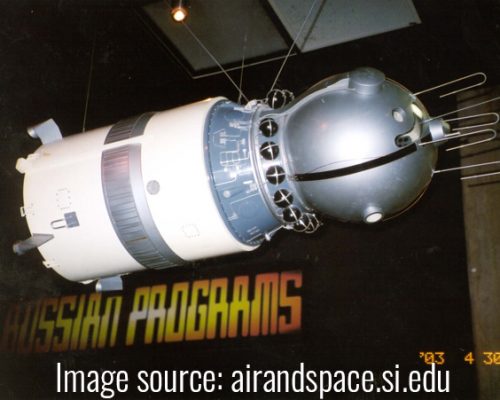
After the failure, the US hired Von Braun and his team to launch a satellite into earth’s orbit. Von Brun and his team developed a rocket called the “Jupiter-C.” It was launched from Cape Canaveral on January 31, 1958; the mission was a success, and America had officially entered the space race with the Soviets. There was no time for celebrations as the soviets were preparing to launch a human into space using their newly designed spacecraft called “Vostok-1.”
In America, the news spread about the Soviets’ success, so the newly appointed US President John F Kennedy wanted to beat the soviets in the space race. The next logical step was landing a man on the moon and safely bringing him back to earth.
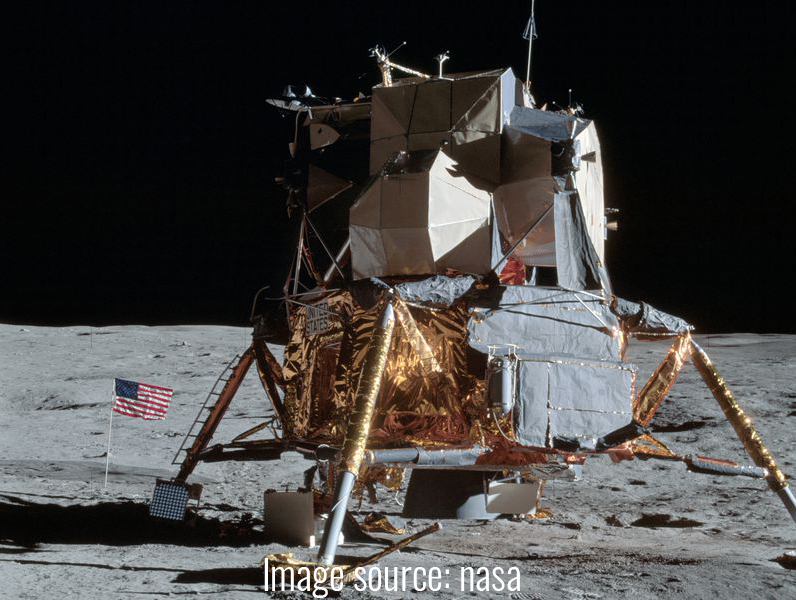
Now Von Braun had an opportunity to show his skills; he had to devise a plan for a lunar mission. Von Braun feared a direct launch was impossible, so he developed a way to build a lunar lander in space. In his plan, more than a dozen rockets would rendezvous in earth’s orbit, forming a space station where a large lunar lander would be constructed. Grumman aircraft company was assigned the task of building the lunar lander.
Tom Kelly, an engineer who worked at Grumman, was determined to find a better way of landing on the moon. Instead of launching into the earth’s orbit, Kelly’s rocket would enter the moon’s orbit, and then a small landing module would land on the moon’s surface and launch back into the mother ship, and then return to earth. His plan had risks, but Kelly was determined that his plan was better. In the end, Tom Kelly received the green light for his plan.
In the Soviet Union, Korolev successfully landed the first artificial object on the moon called Luna-2 and was close to coming up with a plan to land a man on the moon.
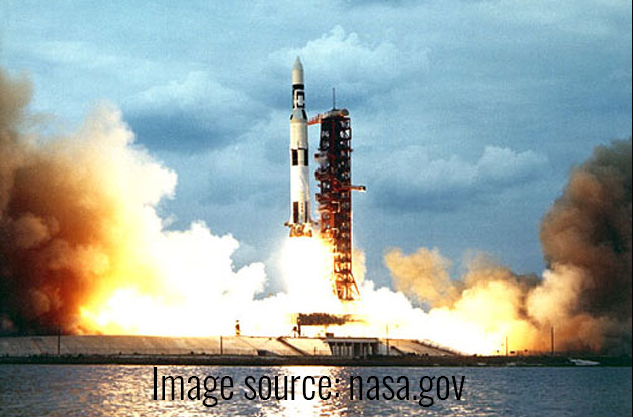
To send a man to the moon, Von Braun had to build the world’s biggest and most powerful rocket. His answer was the Saturn-five, a three-hundred and sixty-three-foot-long rocket with three separate stages that would require five million pounds of fuel to launch. On November 9, 1967, the first full test of the Saturn V was a success, but perfecting it would take more than just one test.
With just over a year left until President Kennedy’s deadline, NASA decided the third test of the Saturn-five rocket won’t be a test but would become Apollo-8, the first crewed mission to orbit the moon, which launched on December 21, 1968, and was a success with Von Brauns rocket successfully deploying during its stages.
Meanwhile, in the Soviet Union, the soviets suffered a significant setback when their lead engineer and designer, Sergei Korolev, died at the age of fifty-nine. In February 1969, the soviets tested the N1, which was equivalent to the power and size of Von Braun’s Saturn-five, but the N1 exploded on launch, causing a major setback to the soviet space program.
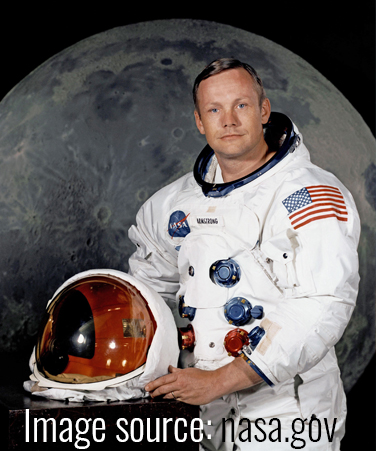
In the United States, Von Braun and his team rehearsed the steps for a lunar landing with the Apollo-9 and Apollo-10 missions. On July 16, 1969, Apollo 11 blasted off the launchpad and began a new chapter in human history. Neal Armstrong, Buzz Aldrin, and Michal Collins travelled three days and two hundred thirty-six thousand miles to the moon as the entire world watched as Armstrong and Aldrin descended to the lunar surface and landed. On the moon, Neal Armstrong said the iconic words, “One small step for man and one giant leap for Mankind.” In July 1969, Neal Armstrong made history by becoming the first man to set foot and walk on the moon.
After creating the Saturn V, Von Brun spent the rest of his life introducing a new era of space travel by developing NASA’s concept of the spacecraft program and helping establish the National Space Institute.